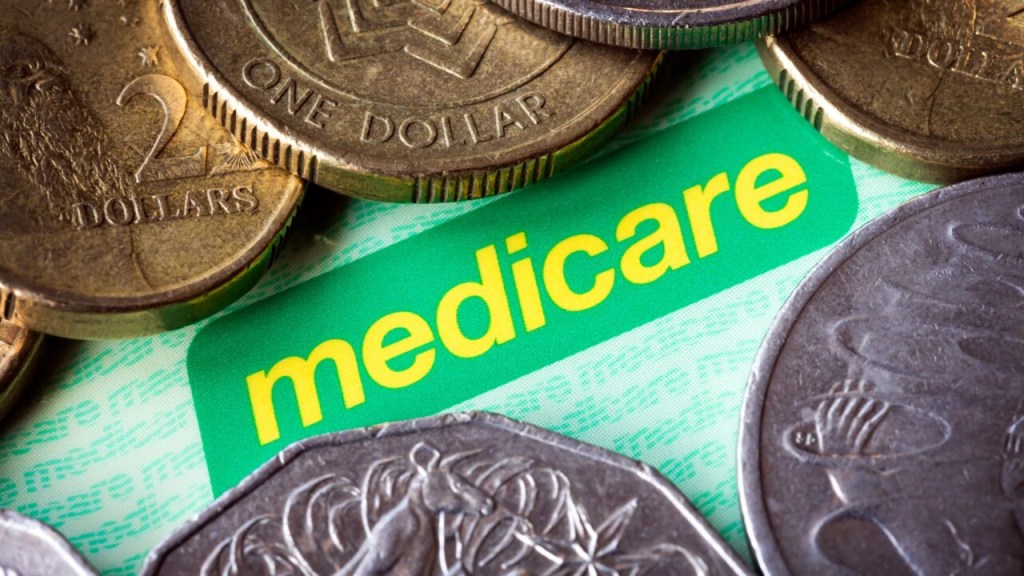
A concerning trend has emerged in Australian healthcare of a decreasing number of clinics offering bulk-billing for GP services. But what is perhaps even more concerning is that despite the objective reality that is recognised by professionals, patients and politicians alike, there has been little to no action in addressing the issue.
The average proportion of GP clinics across Australia in 2024 decreased from 24.2% to 20.7% according to cleanbill. The impact of this decline in supply is only made more problematic by the fact that more Australians are in demand of affordable healthcare options due to both higher living costs and an aging population.
Failure to curb this straining trajectory will be detrimental in multiple ways. Beyond just the ramifications to the health of many Australians. Continual challenges for Australians to visit their first line of defence in regards to their health will almost certainly result in strains on other health services both state and federal. Hospitals, the NDIS and Aged Care Services will be left to pick up the additional work created due to a lack of early healthcare intervention.
Fortunately, the solution to this problem is an easy one. And a solution that politicians and parties love. Money just needs to be thrown at it. The rebate value for a GP or clinic has not kept up with costs such as, rent, electricity and overheads. While medical professionals have been able to subsidise these increasing costs by increasing their private fees, their rate of revenue for bulk-billed services has not kept up. By increasing the rebate that GPs and clinics can claim they will be re-incentivised to provide these services again, and the increased investment now will undoubtably result in savings for tax payers further down the track.
Unfortunately, however, an increase in funding provided to well to do doctors is not a sexy election promise. And while from a public service point of view there is an undeniable benefit, from a political point of view that money is better allocated towards something that can be a part of a big ‘revolutionary’ announcement. Something that can be put on the front page and get voters excited.
This all points to a broader issue in politics both in and outside of Australia. The policies and actions that could be easy and obvious wins in trying to increase living standards now, and set up a nation for a stronger position in the future, are not the policies that are going to win government.
While the idea that vote winning policies are not always the same policies that are the most effective is hardly a revolutionary idea. The disconnect between these policy groups become even stronger at a time like the current, when voters are feeling cost of living pressures. Furthermore, the anticipation of Australians that the upcoming budget is likely to look like a backwards economic step, means that voters are likely to look less favourably towards any increases in expenditure at all. How can voters be expected to get excited about investment that benefits the future at a time when many Australians are making tough household budget choices now?
As Australia gears up for a federal election in the coming months voters are going to be asked two key questions. Do you feel better off now than you did four years ago? And, which party do you think will leave you better off four years from now? When reflecting on these two questions the average voter is likely to think about things like their, employment status, cost of living, access to housing and how much tax they are paying. The average voter is far less likely to consider how easy it was to find a bulk-billing GP when they were ill 12 months ago, or how much money the government will be saving in a decade from now. And a government is unlikely to get credit for good economic management by increasing spending despite the obvious savings a decade down the line. Instead, whoever it may be delivering that future budget is likely to be rewarded by the voters and hailed as the strong econimic manager.
Therefore, the competing parties and candidates at this upcoming election will be even more likely than usual to forgo the opportunity to take easy policy wins in order to take political wins. And those who do opt to take the path of providing the easy solutions on offer, are less likely to be rewarded at the polls.
This counter-intuitive trade-off means that candidates and parties are not rewarded for being ahead of the curb. If an incoming iceberg is spotted ahead, it is much more effective from a political point of view to hit the iceberg and then provide the lifeboats rather than to steer away from the iceberg. If the problem or “iceberg” is experienced. Voters are then able to properly feel the impact of a policy by having experienced both the before and after. They experienced a hardship, and then the government fixed it. However, by taking preventative measures, a government may be accused of burning extra resources or taking a longer routeb to avoid an issue or “iceberg” that voters are unsure if they will even hit. By not feeling the full impact of what inaction may have resulted in, voters don’t have a comparative change in experience to credit to the policy or policy-maker.
Ultimately, there are easy wins available to the living standards and sustainability of Australia if politicians should choose the accept them. However, as these wins are unlikely to come with as significant of an election reward as other options for government time and resources, they are likely to be neglected. This likeliness of neglection is made only more likely due to economic hardship. And it is this trade-off that may cause Australia to miss out on forward thinking policy that will best position itself for the future.
 The Last Week's Journal